

Tadpole shrimp (Triops cancriformis)
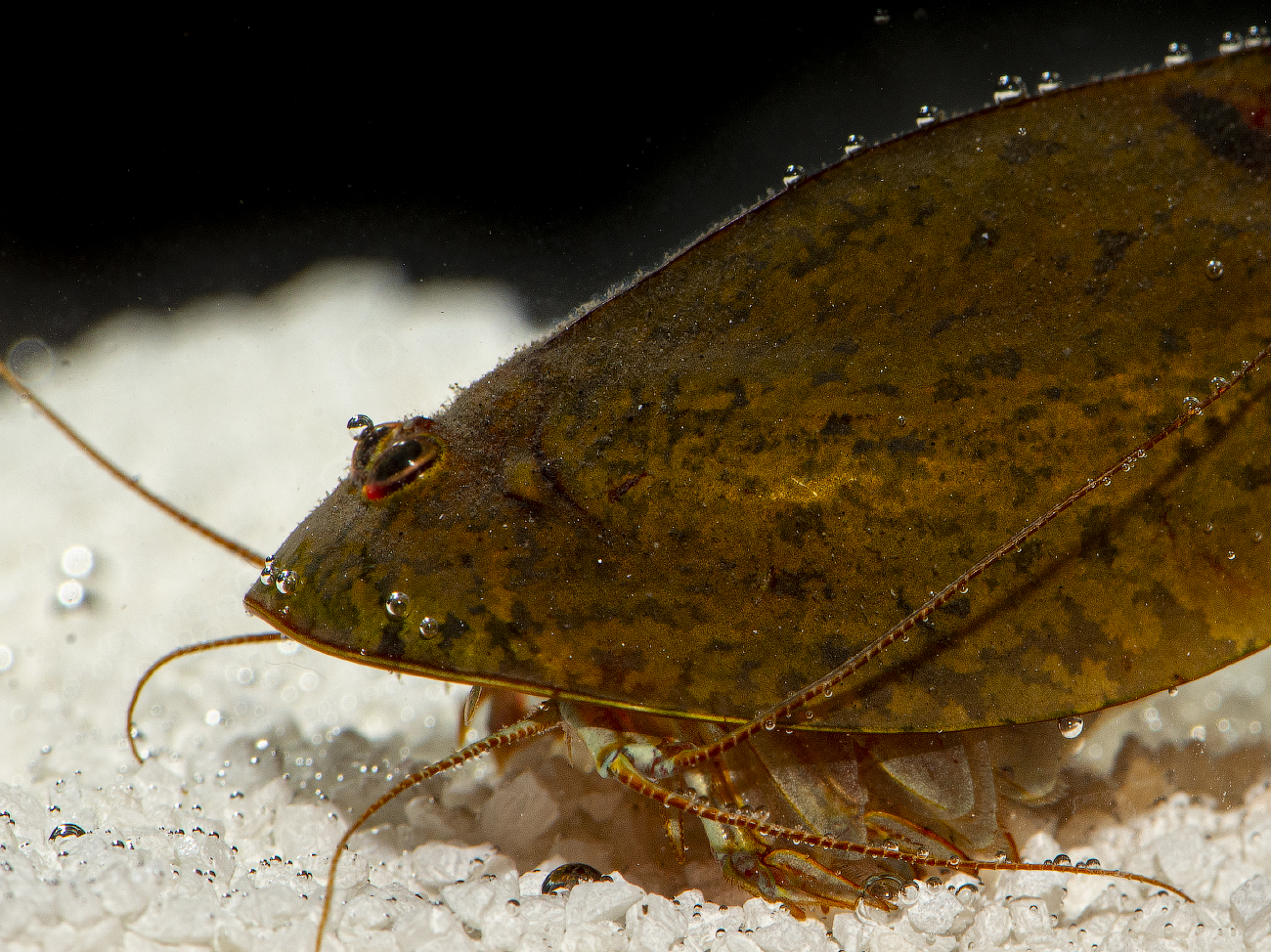
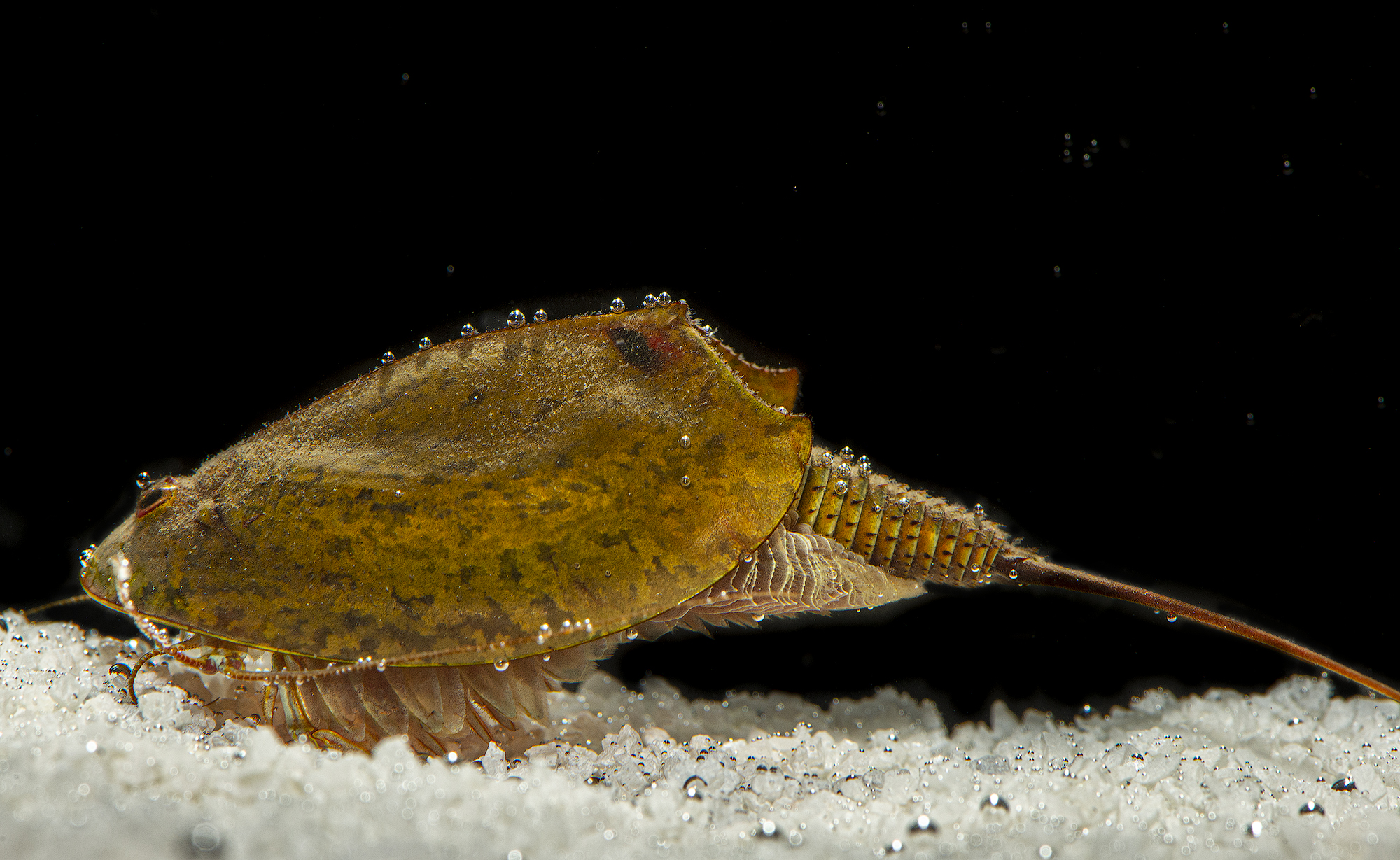
1. This unusual creature with an archaic appearance can be found in European, Asian, and African puddles in spring and summer. This is a summer tadpole shrimp, or common tadpole shrimp (Triops cancriformis), a small crustacean of the Branchiopoda class, ranging from 2 to 11 cm in length. It was so perfectly adapted from the start that it has barely evolved over the last 250 million years.
In Russia, another representative of the tadpole shrimp can also be found — the spring tadpole shrimp (Lepidirus apus). The easiest way to distinguish it from the summer tadpole shrimp is by the small plate located between the tail branches; they are also somewhat smaller (4–6 cm). These tadpole shrimp appear from late March through April to early May, when the temperature rises above 15°C.
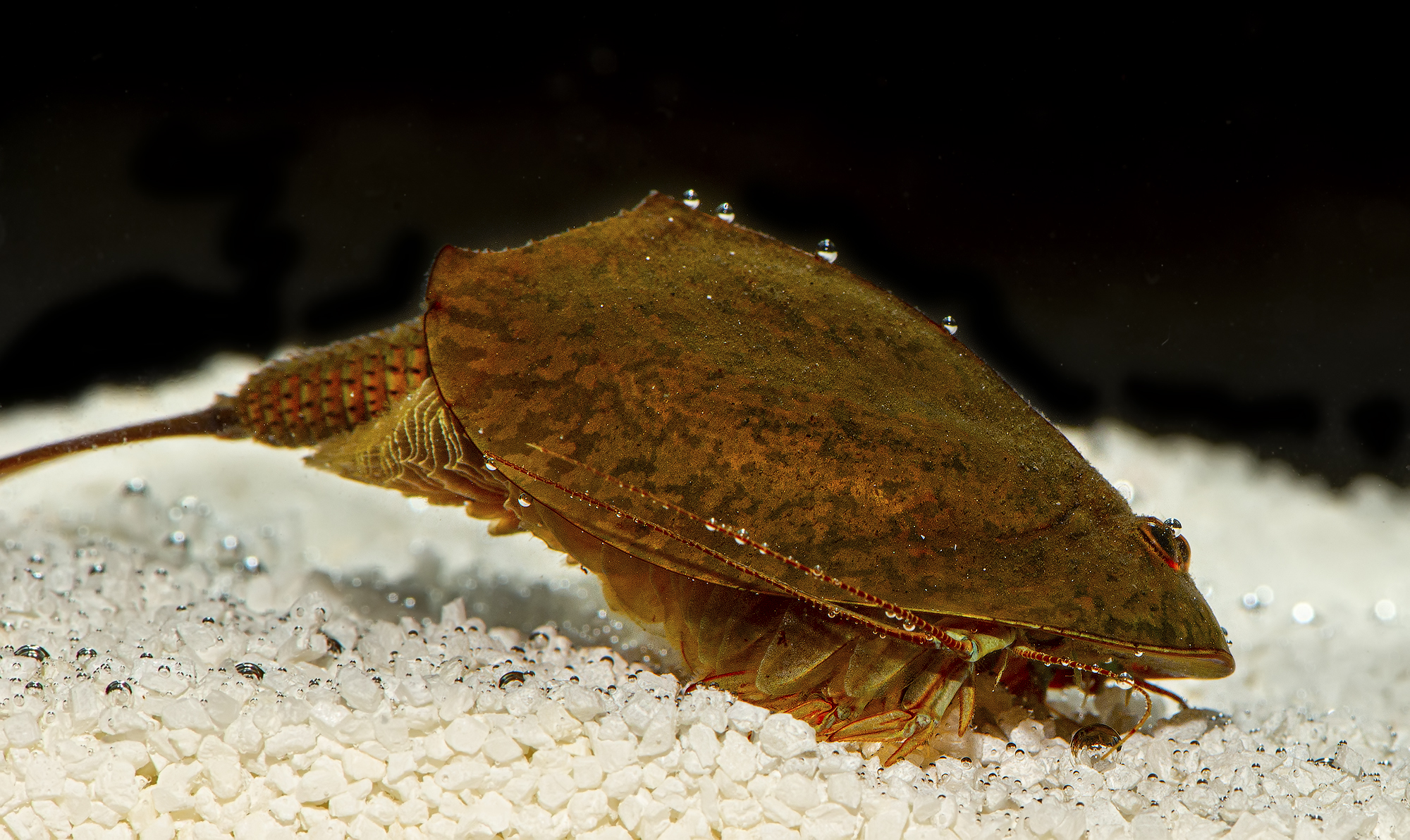
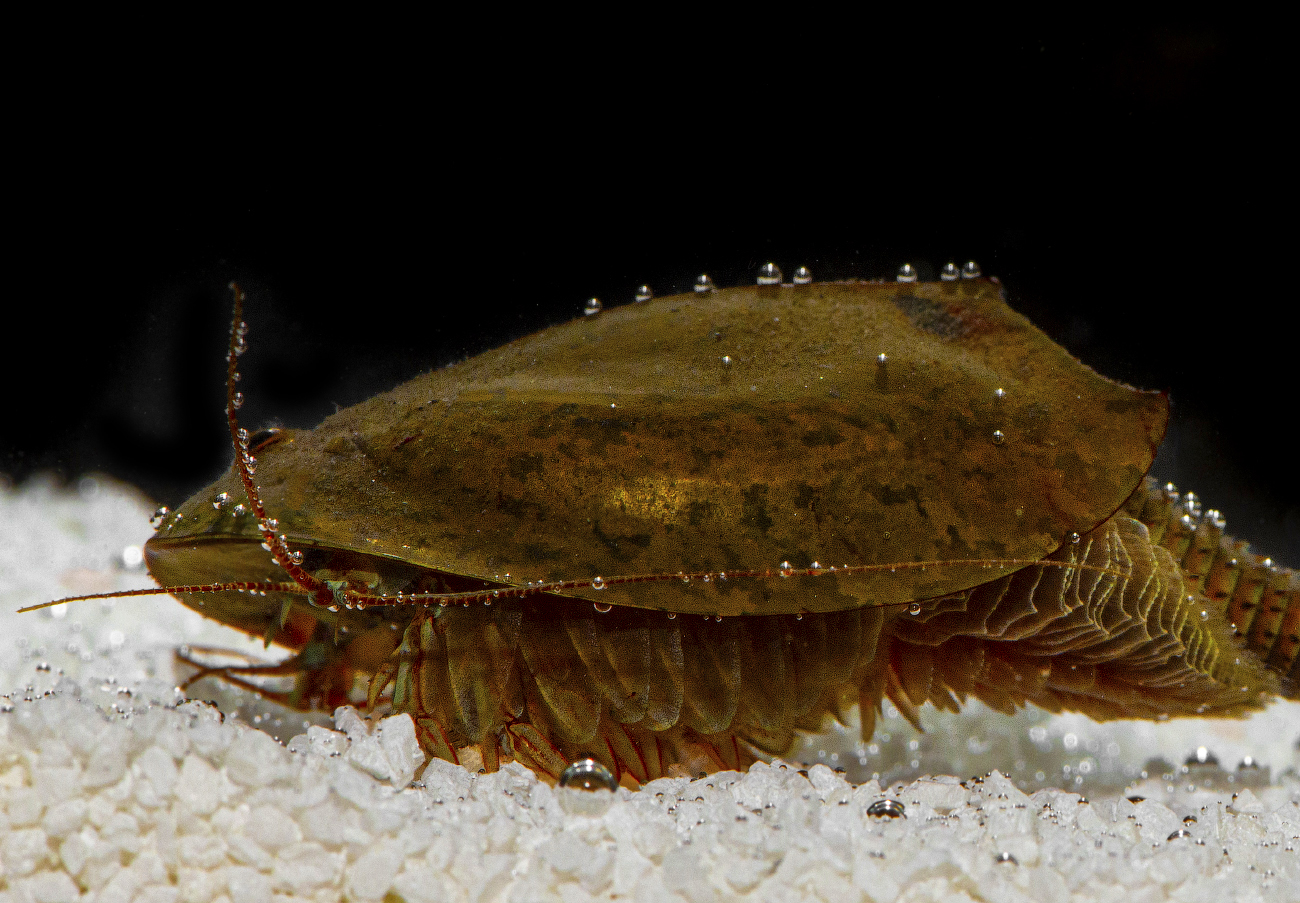
2. Most of the tadpole shrimp’s body is covered by a shield, which gave these animals their Russian name.
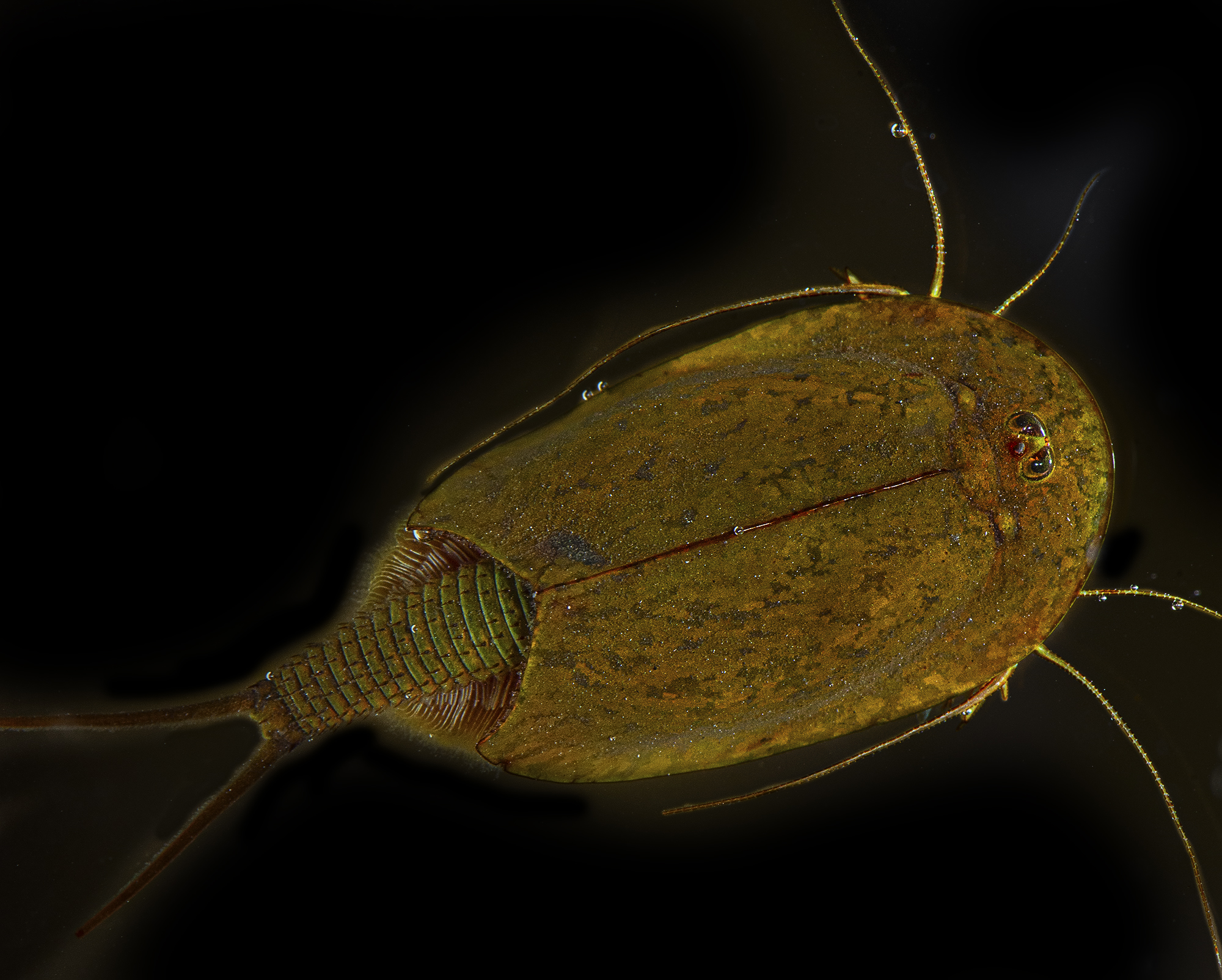
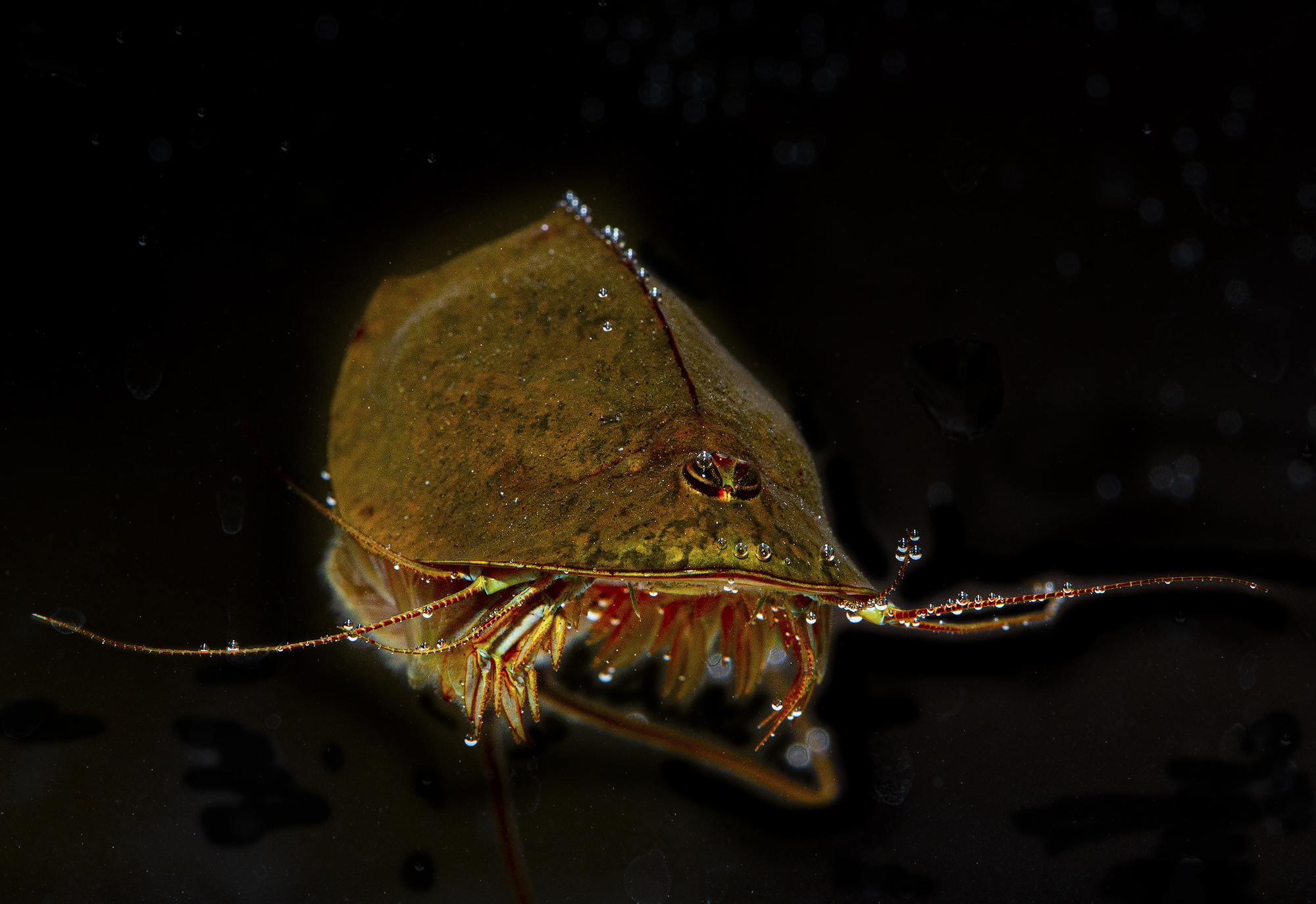
3. Tadpole shrimp live in small freshwater bodies up to 2.5 m deep, either permanent or temporary (puddles, ditches, and wheel ruts). They can be found from late May to mid-August, with an optimal temperature range of 15–25°C. Tadpole shrimp feel uncomfortable when the temperature changes, and if the change is too drastic, they may even die. The Latin genus name Triops translates as “three-eyed” — take a close look at the main photo: above the two eyes there is a small, simple third eye that can only distinguish light from darkness.
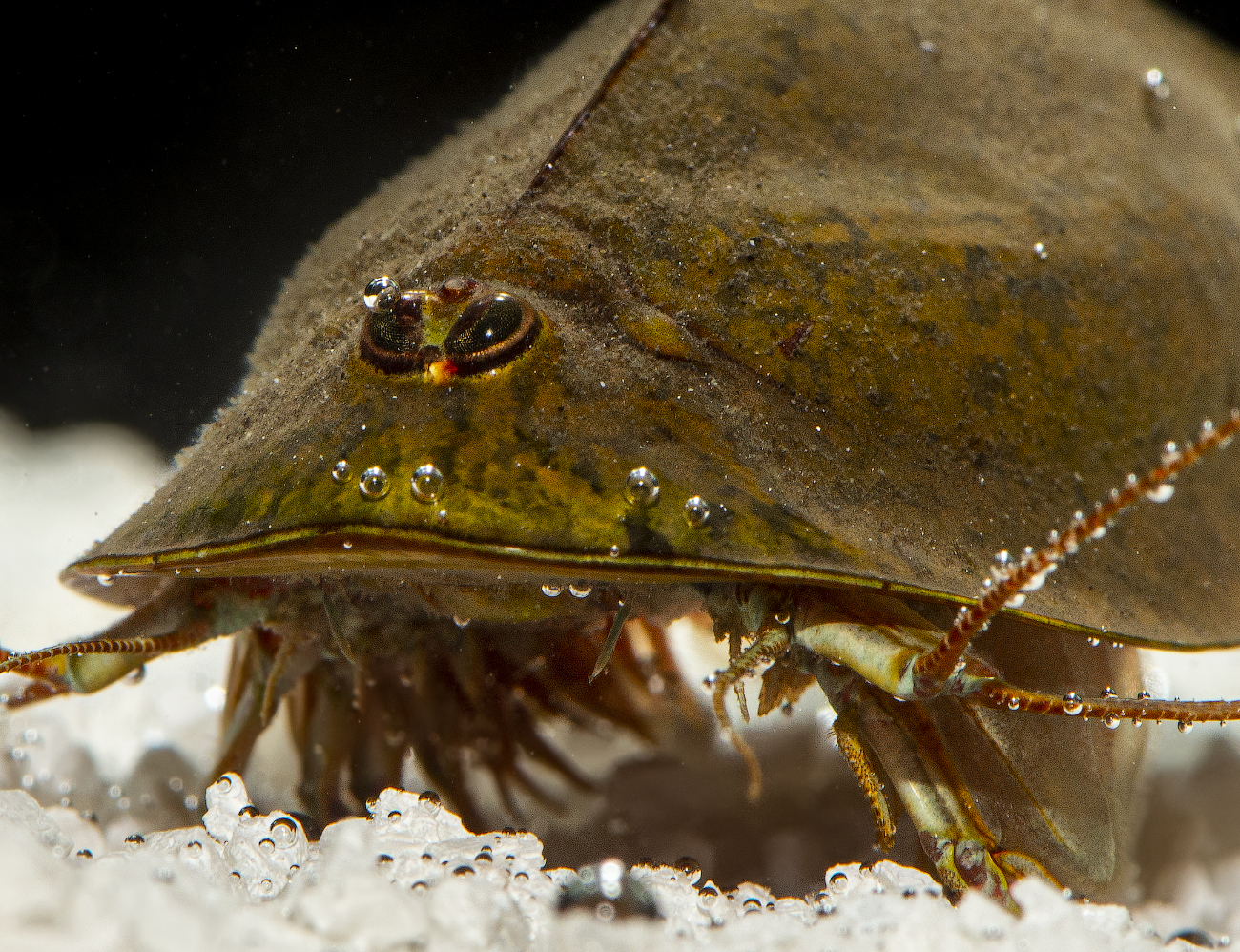
4. Tadpole shrimp are omnivorous. They spend most of the daylight hours searching for food, digging through the bottom with their numerous legs. They can feed on algae and soil particles, but they also enjoy eating branchiopods and midge larvae. When the opportunity arises, they may attack tadpoles and fish fry, and if food is scarce, they may even attack members of their own species.
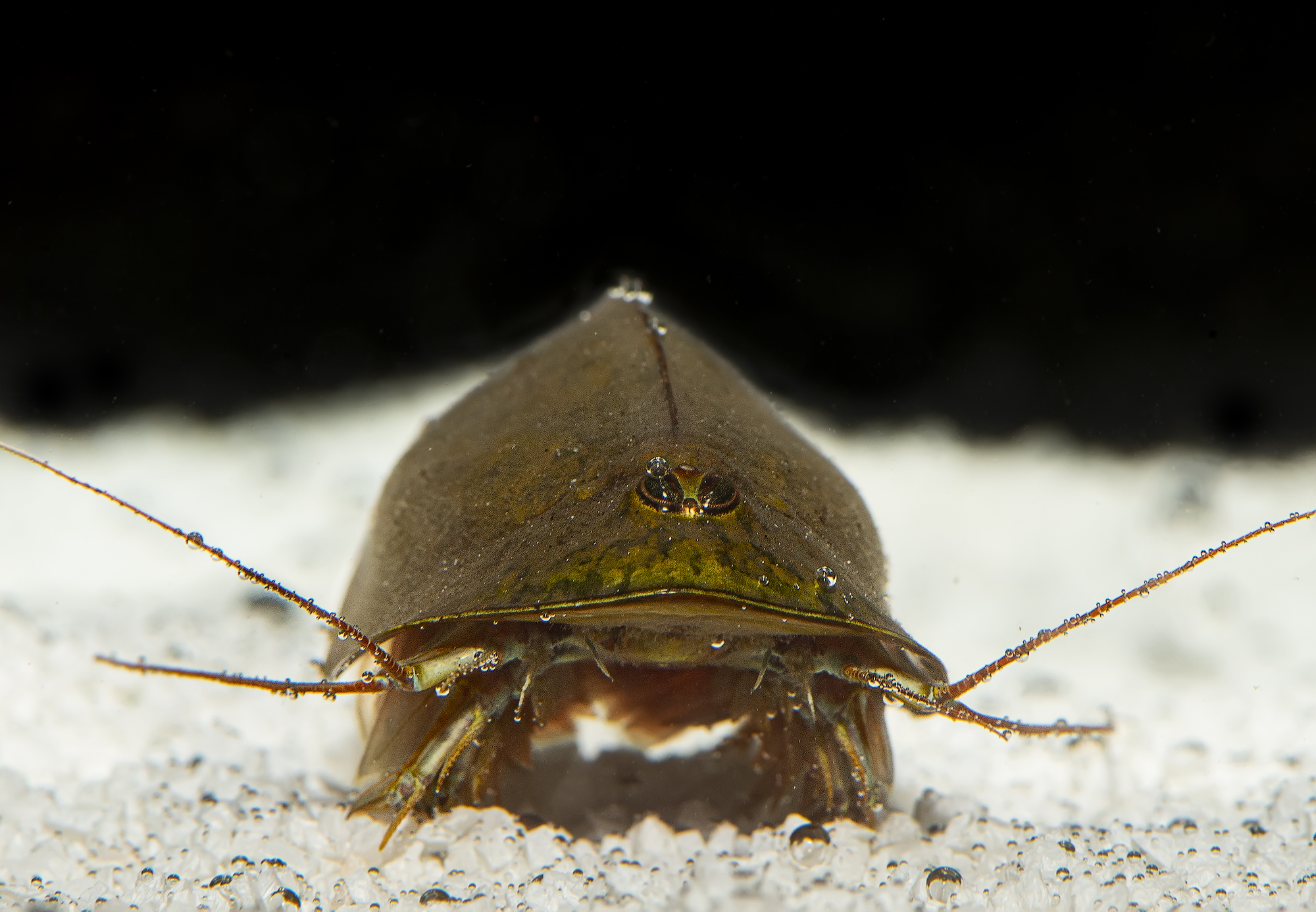
5. Summer tadpole shrimp usually live for 90 days, although just 20–25 days may be enough for them to reproduce. Their reproduction is quite unusual. Some populations consist of males and females, some consist only of hermaphrodites, and others consist of hermaphrodites and males.
6. Females and hermaphrodites carry fertilized eggs in an egg capsule on the legs of the eleventh body segment until the larvae inside them (nauplii) are sufficiently developed. The eggs are then covered with a protective shell and become cysts, after which they can be laid. Such cysts can remain in the soil for several decades, awaiting favorable conditions. They are highly resistant to drought, heat, and severe cold, and can also be carried long distances by wind or animals, significantly expanding the species’ range.
7. Young individuals usually emerge from the cysts as soon as there is enough water of a suitable temperature and plenty of light, and when the environment contains no traces of the excrement of larger animals (potential predators). However, the mechanism has not yet been fully studied.
8. In the initial stages, only half of the cysts become active, in case the body of water dries up too quickly. But if it lasts long enough, the remaining cysts, as well as newly laid ones, can also become active.
9. Tadpole shrimp hatch at about half a millimeter in size and grow very quickly, undergoing around forty molts before becoming adults after 2–3 weeks.
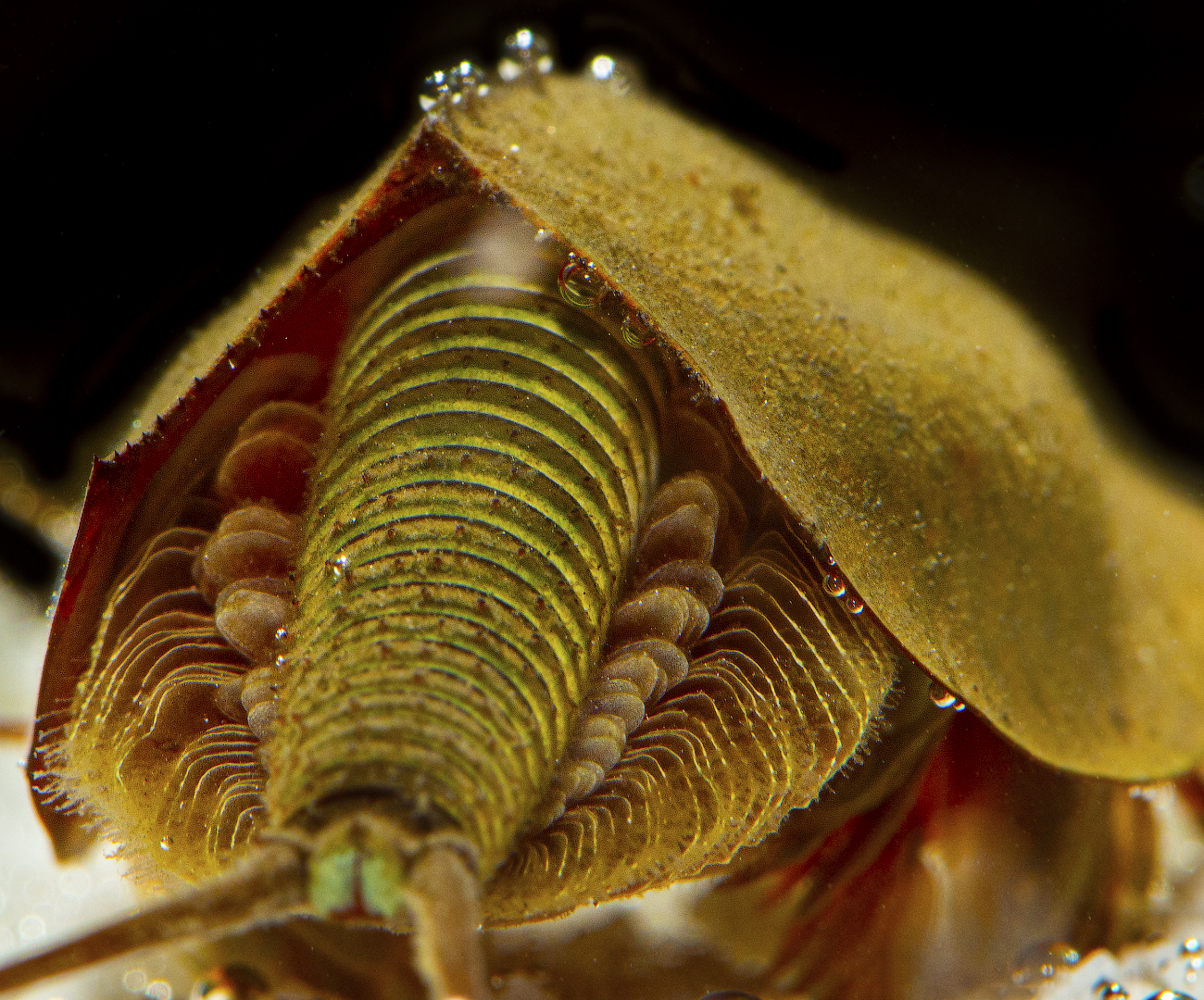
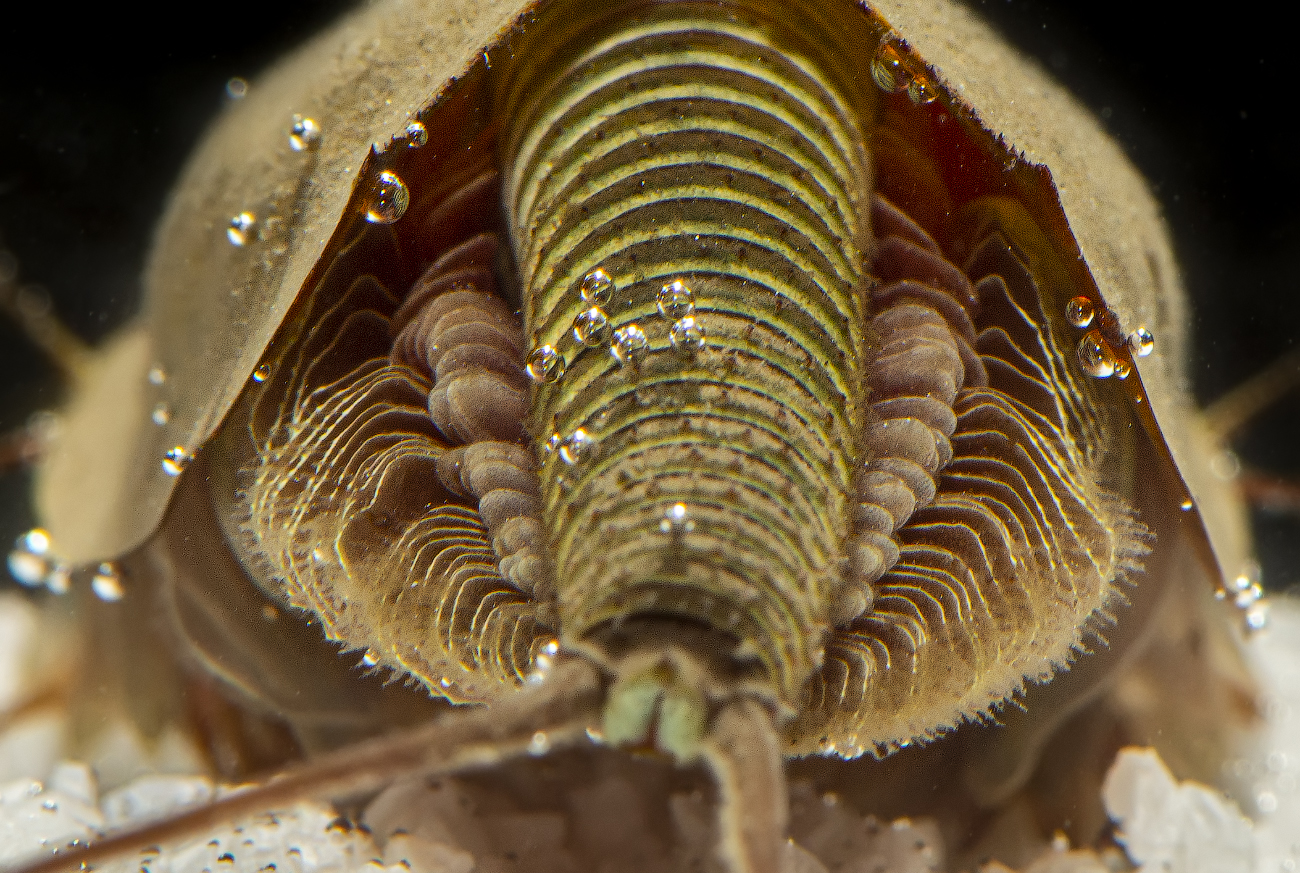
10. The body structure of the tadpole shrimp is unique. From the ventral side, all of its numerous legs are visible; their number can reach 70, something not observed in any other crustaceans.
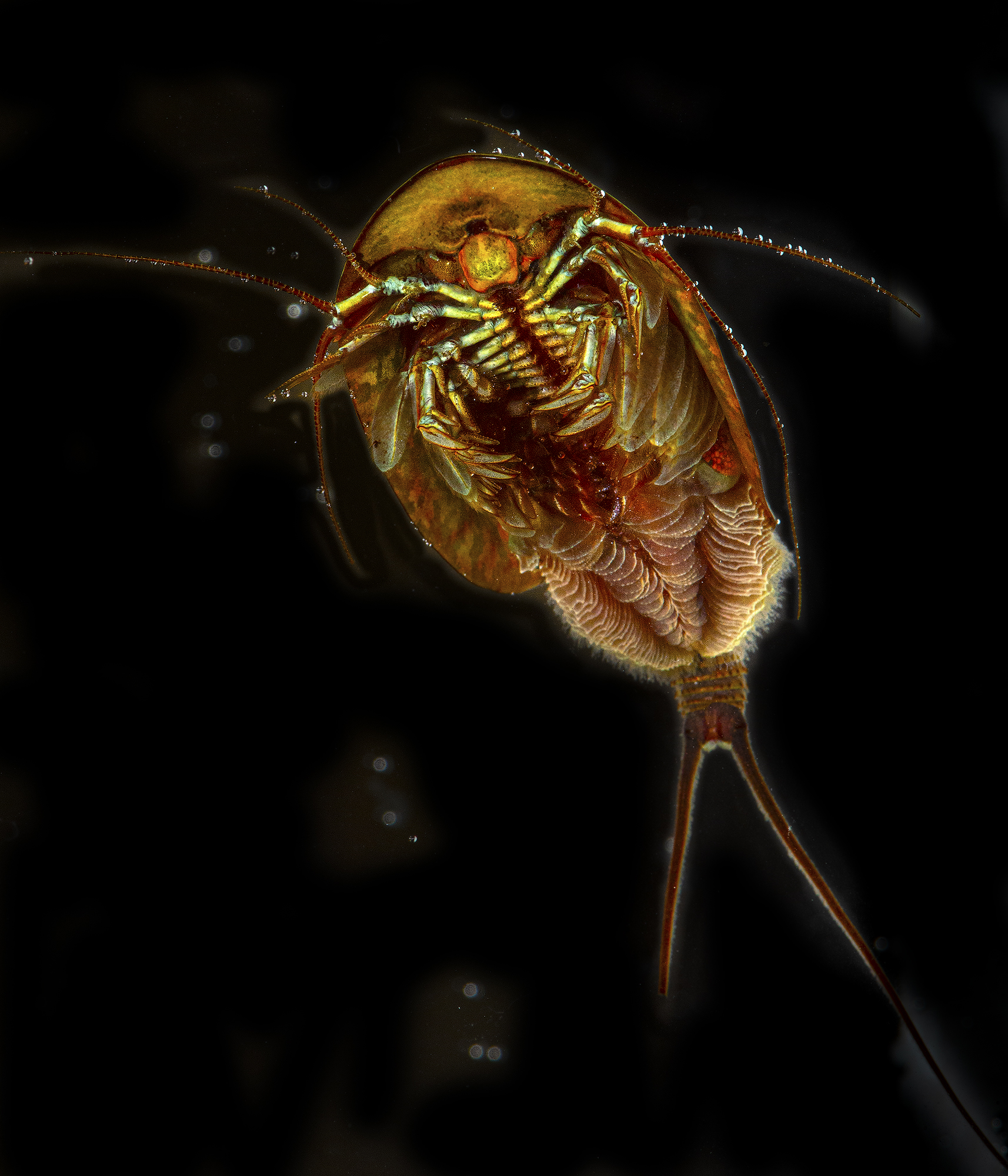
11. The first ten body segments each bear a pair of thoracic legs, divided into two segments. On the inner side, they have six lobes that move food toward the mouth (their jaws are reduced), while on the outer side there are two lobes: a large swimming lobe and a smaller respiratory lobe that functions as a gill.
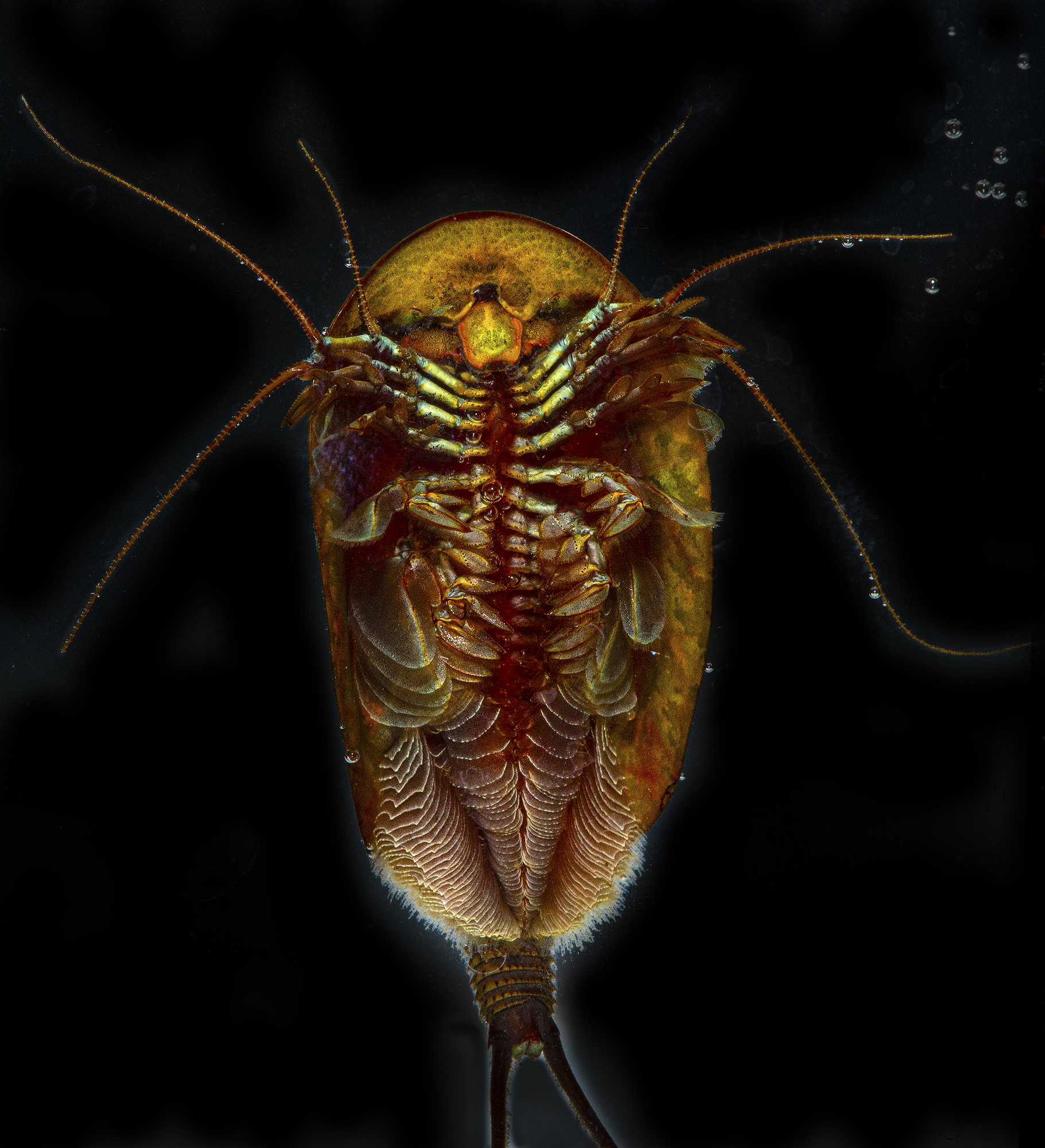
12. Tadpole shrimp are quite popular in home aquariums, and kits for raising them are sold. This specimen was caught in a puddle at the end of August.
Back